

Creative Destabilization
Hack Your Subconscious Mind for Literary Breakthroughs

I often focus on reducing cognitive load as a way to keep the writing process manageable. Cognitive overload can lead to anxiety and doubt, and this might discourage the writer from keeping their writing streak alive. An article by George Saunders reminds me it’s also useful to practice sitting in the discomfort of not knowing where the writing is going. This ability to sit with discomfort is also a skill writers need to practice.
I know people who have given up on meditation after their first sit because their mind was racing or their bones ached, and of course, that is the point of meditation at that stage, to sit with discomfort and observe the scattered thoughts that arise. So too with writing. The path is rarely straightforward or comfortable, and in our effort to optimize we can overlook the productive power of doubt and uncertainty.
An over-optimized process is over-determined. Going back to meditation, it’s possible to clear the mind and detach from all feelings of discomfort, but this state of tranquility often leads to dullness, not insight. For the writer, an over-optimized state of flow can lead to dullness as they write. They need a slight tickle of curiosity to keep their attention from sinking too deep.
To stop that from happening we can follow Saunders’ advice and engage in creative destabilization. Throw a wrench in the gears of the story and struggle to recover.
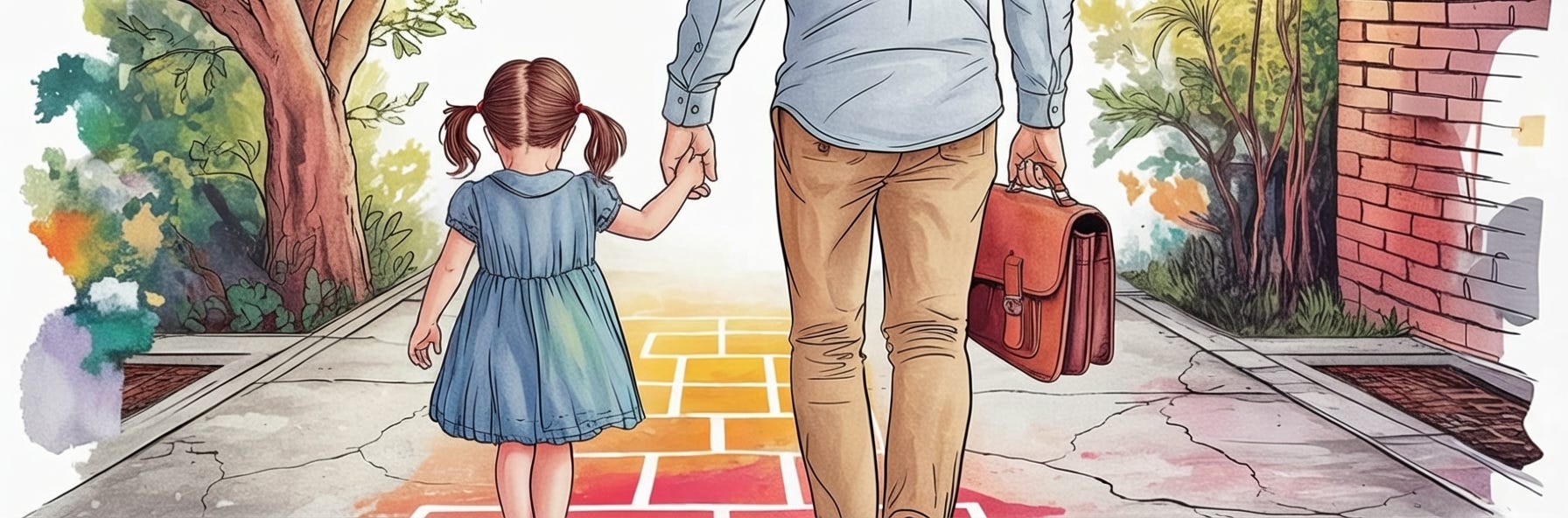
The reader’s experience of the finished text and the writer’s first pass are two sides of the same page. The writer cannot simulate spontaneity. Consider a simple game of hopscotch. The moves are predetermined—and may be fun—but they lack the random joy of a child tugging against her father’s hand as she tries to step inside the pattern of cracks in the sidewalk they are walking across. The game of hopscotch, as an artifact of culture, arose from the child’s instinct to dance within the lines, but it is bounded by rules, repeated, and perfected. Natural movements bubble up, shape an experience, and then are swept away by the child’s fatigue or a father’s call to “keep up.”
A reader will know the difference between a text that was performed rather than discovered. If the writer feels lost, the reader too will feel lost in the story. Then they will delight when it all comes together.
“That lostness is felt, by the reader, as openness, and as connection—reader and writer become fellow-travelers in the unfolding adventure of the story.”
— George Saunders

In his article, Saunders cautions against the “faux-Hemingway voice” we writers try to adopt. This voice is shaped by our own ego. This is like trying to mimic the voice of a meditation master as a step on the path to enlightenment—take long pauses, kick off with the word, “so,” and speak in a deep, sleep-inducing monotone.
As writers, if we lean heavily on predetermined structures or plot beats, we will slip into this all-knowing, overly serious, authoritative voice. It works in the right context, but lacks the openness and genuine connection that arises from getting lost and beating a path back home. When I first started using GPS, I realized I was losing my ability to navigate on my own, so I started going out on Sunday drives, getting lost, and letting myself trust the GPS could get me home if my sense of direction couldn’t. And it worked. The more I did this, the better I got at navigating the streets around me. That is how art should work.
Creative destabilization does introduce the danger of overtaxing the mind of the writer-as-navigator as they struggle to find their way down unfamiliar streets. Learning to tolerate discomfort is a skill that needs to be practiced, but it pays off in dividends because it makes learning every other skill more tolerable.
But that tolerance is also a sign to push a little further into the discomfort.
Saunders wrote about rundown theme parks, and he found that worked as a tool to destabilize his writing—although, maybe not so much anymore. Readers of Haruki Murakami might notice how often he puts his characters in wells. Why? The writer doesn’t need to know what these elements mean before starting to write. It will come out in the draft or in the edit, and even if the connection is never found, the reader will supply their own interpretation of your grand narrative. That’s the power of the narrative human brain which is always looking for connections.
The writer can then say, “Yes, of course, that’s precisely what I meant.”
I could give you a checklist of the five key takeaways—I have one all written up and ready to go—but the master’s final lesson is to transcend all checklists. Doubt is the engine, not technique. Don’t let technique stabilize. We have to trick ourselves out of writing with too much competence if we want to write stronger stories.

Go read Saunders’ original article that I linked above. If you’re willing to feel a bit uncomfortable, try this approach with your own writing. Here’s an exercise that asks you to sit with a touch of absurdity.
» Streak Saver Exercise: Normalizing the Abnormal
Setup: Think of a character who is going about an ordinary task in a setting that is obviously wrong or exaggerated in one specific way.
🎯 Goal: Engage the reader with a heightened sense of something that is off-kilter through the character’s lack of reaction.
🚧 Constraints:
The character never acknowledges the strangeness, treating it as routine.
Use the character’s everyday concerns as the foreground.
Write until the character leaves, or the odd element departs.
🪞 Reflection: Did you find yourself trying to explain the strangeness? How does the contrast between the ordinary and the strange affect the tone?